Top Scenic Routes in Dubai Every Traveler Must Experience
- Home
- Top Scenic Routes in Dubai Every Traveler Must Experience


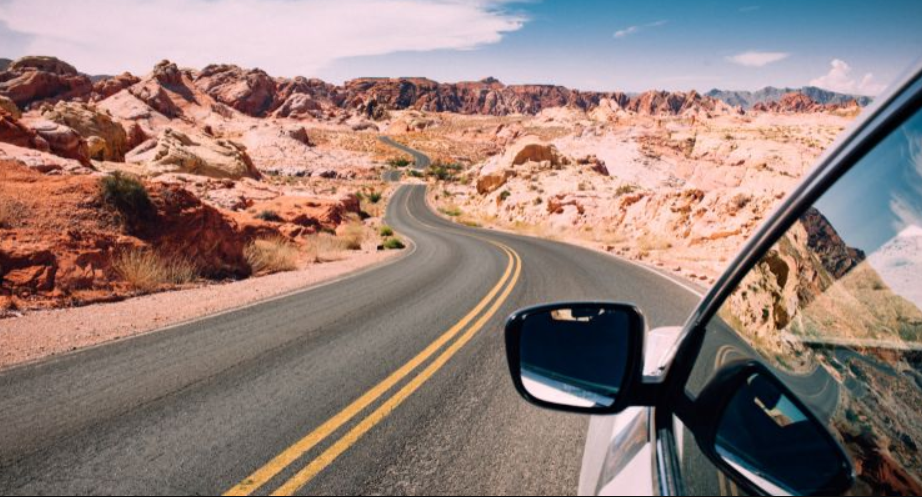
The best scenic routes in Dubai are roads, not destinations. Almost every guide to scenic drives here quietly turns into a list of attractions with a car mentioned in the opening line, which leaves the reader knowing where to go and nothing about the journey. This one covers the driving: which stretches of road repay the trip, which way round to take them, what hour the light works, and where you may legally stop.
That last point decides more than visitors expect. Stopping in the middle of a UAE road without a justified reason costs AED 1,000 and six black points, and the prohibited hard shoulder carries AED 1,000 of its own. The view and the places you may pause are rarely in the same spot, so a scenic drive in Dubai is a planning exercise before it is a pleasant afternoon.
White Line Limousine LLC has dispatched chauffeured vehicles across Dubai and the northern emirates since 2011. Seven routes follow, grouped by what each one actually gives you: four inside the emirate, three worth the drive out.
Four routes sit inside Dubai: Jumeirah Beach Road, Palm Jumeirah, Sheikh Zayed Road and Al Qudra Road. Hatta is Dubai too, though it is a full day.
Jebel Jais is in Ras Al Khaimah and the east coast runs through Sharjah into Fujairah, so three of the seven leave the emirate.
Direction matters more than distance. The same road gives two different journeys depending on which way you drive it.
You cannot pull over for a photograph on a Dubai highway, which makes planning the stops most of the work.
Fuel, Salik tolls, parking and VAT sit inside a chauffeured rate, so a long route costs the figure you agreed before setting off.
The UAE treats stopping on a road as a serious offence, and the penalties are specific enough to change how you plan a drive. According to Gulf News, summarising the federal traffic rules under Ministerial Resolution No. 178 of 2017, stopping in the middle of the road without justification costs AED 1,000 and six black points. The prohibited hard shoulder carries AED 1,000. A yellow box junction is AED 500, a pedestrian crossing AED 500 and six black points, and stopping in a way that endangers pedestrians AED 400. Those figures were published in 2022, so confirm the current amounts with the authority before you rely on them.
The principle has held throughout, and it is simple enough: the hard shoulder exists for emergencies, and a photograph is an emergency to nobody.
Work through what that means on the ground and the topic reorganises itself. The most photogenic sections of Sheikh Zayed Road, the Palm’s trunk and the mountain approaches have no legal stopping place at all. You see them through a window at the speed limit, or you see them from a car park you chose in advance. There is no third option, and the drivers who improvise one are the drivers collecting six points.
It is also the plainest argument for a chauffeur that this topic offers. A passenger looks out of the window for the whole journey. A driver gets to stop somewhere permitted, or gets to look at the road.
Three variables decide whether a road is worth driving, and the competing guides on this query skip all three in favour of listing landmarks and drive times.
Direction decides what sits in your windscreen. Sheikh Zayed Road northbound puts the Burj Khalifa ahead of you and southbound puts it in the mirror. The Palm Crescent taken west gives you the Dubai Marina skyline across open water; taken east it gives you the back of a row of hotels. Jumeirah Beach Road southwest builds steadily towards the Burj Al Arab. None of that appears on a map, and getting it wrong wastes the trip without the reader ever understanding why the drive felt flat.
Time of day decides whether the drive is worth doing at all. Desert and mountain routes want early morning or the hour before sunset, because midday sun flattens dunes and ridgelines into haze. City routes want the evening, when the towers light up and low sun catches the glass.
Season decides whether you will want to get out of the car. Dubai averages around 31 degrees Celsius in November, 26 in December and 24 in January, against 42.1 in August, so November to March is the window for anything involving standing outside. Winter also brings fog inland. When visibility drops, variable speed limits fall to 80 kilometres per hour on affected roads and appear on the electronic boards, and the National Center of Meteorology issues a red alert below one kilometre. Fog usually lifts later in the morning, so an early January start in the desert is worth a forecast check the night before.
These two share a half day comfortably, and they are the only routes here with stopping worth the name.
Jumeirah Beach Road runs roughly parallel to the coast through the low rise villa districts of Jumeirah and Umm Suqeim. The Burj Al Arab sits out on the seaward side, with the Downtown skyline behind you. Urban speed limits, traffic at a civil pace, and frequent legal places to pull in, which is rare on this list. Take it southwest so the Burj Al Arab builds in the windscreen instead of arriving in the mirror. Go late afternoon, when the light comes off the water. Kite Beach and the public beach car parks are the obvious stops.
Palm Jumeirah rewards one specific direction and wastes the trip if you take the other, which is what most visitors do. The trunk runs out between the frond villas to the Atlantis at the head of the island. From there it splits onto the Crescent. Drive out along the trunk and take the Crescent west. The Marina towers sit across the water on your right as the road curves, and that stretch is the whole point. Most people reach Atlantis, turn around, and never see it.
Stopping on the Palm is limited and controlled. The Crescent has hotel entrances and a handful of public areas, the trunk has none at all, so plan the pause around a restaurant instead of hoping for a free kerb. Our limousine service in Palm Jumeirah covers the island, and the pair of routes together combines naturally with a Dubai city tour with a chauffeur if you want the old town in the same booking.
Sheikh Zayed Road is the most recognisable road in the country and the one most people experience badly, because they take it at the wrong hour in the wrong direction and conclude that the drive is overrated.
It carries you through the Downtown and Business Bay towers with the Burj Khalifa dominating everything from several kilometres out. It is a working highway first and a view second, and it carries Dubai’s heaviest traffic. Northbound towards Deira in the early evening is the version worth doing: the towers build as you travel, and the hour before sunset puts the best light on the glass.
Avoid 6am to 10am and 4pm to 8pm on weekdays unless you want that view at a standstill. Those windows are also when Salik gates charge AED 6 against AED 4 off peak. Sundays run at AED 4 all day, and the gates are free between 1am and 6am. That happens to be when the road is emptiest and most dramatic.
There is nowhere to stop on this road. None of it. The photographs people associate with the drive come from hotel terraces, from the Dubai Water Canal bridges, or through a window at speed. A late evening run finishing in Deira or Downtown is one of the better uses of an hourly booking in the city.
Al Qudra Road is the only route inside Dubai where the city disappears completely, and it changes what people think the emirate looks like faster than anything else on this list.
The road runs southeast out of the built area into open desert. Al Qudra Lakes and Love Lake sit along it, with dune country on both sides. It is straight, well surfaced and quiet outside weekends, and the handover from suburb to open sand happens sooner than visitors expect. Go early morning or for sunset, since the middle of the day flattens the dunes into glare and gives you nothing to look at. This is a winter route: January averages around 24 degrees Celsius and December 26, against 42.1 in August.
Weekend mornings bring cyclists in numbers, because the track runs alongside. Weekdays are calmer by a wide margin.
Stopping is possible here, which sets it apart from the two city routes. Designated parking sits at the lakes. Driving onto soft sand in a road vehicle is how people end up stuck, and recovery out there takes hours rather than minutes. The route shares a corridor with our Al Maktoum airport transfer run, so a desert morning slots neatly either side of a flight from DWC.
Both are full days, both involve the Hajar range, and they are otherwise different drives. Worth taking them together, because people routinely confuse which emirate each one sits in.
Hatta is part of Dubai, which surprises almost everyone, since very few visitors know the emirate has mountains at all. The E44 runs inland through open desert that gradually turns to rock. The road climbs, the surroundings change character completely, and the Hatta Dam with its green water sits at the end. Drive out in the morning and return in the afternoon: light in the wadis works earlier, and the return gives you the descent with the desert opening ahead. Stopping is good, with car parks in town, a designated area at the dam and places to eat, so this is a route where you can stand still and look.
The Oman border sits beyond Hatta, so the drive itself stays inside the UAE. Continuing into Oman is a separate booking carrying passport and insurance requirements, and our Dubai to Muscat chauffeur route handles that properly.
Jebel Jais is the better road and it sits outside Dubai entirely, in Ras Al Khaimah, which is worth saying plainly before anyone books a half day expecting to fit it in. The climb is modern, wide and well engineered, switchbacking up the range with the valley dropping away beside you. Nothing in Dubai compares. Temperatures at the top run several degrees below the coast, which makes it a real winter destination for residents rather than a curiosity. Go up in the late morning and come down before dark, because the descent is where the views are and the road wants daylight.
Jebel Jais also does something unusual for this region. It provides for stopping, with laybys and viewing areas built into the route. That is the reason it works as a drive and not merely as a journey to a summit. A RAK car with driver covers the emirate, and a higher vehicle is the comfortable choice for the climb with luggage or a family aboard.
Treat the drive time on both as a question to settle on the day. Published figures for these routes disagree with one another, none of them is sourced to an authority, and all of them ignore the traffic you will meet.
Yes, and it is the route fewest visitors ever drive, which is a large part of its appeal and the reason it still feels unvisited.
The road east crosses Sharjah, cuts through the Hajar mountains and drops onto the Gulf of Oman at Fujairah and Khor Fakkan. The coastline is rocky and green in places, and the sea reads a different colour from the Gulf side. The mountain sections on the approach are the scenic half of the journey. Drive east in the morning and back in the afternoon, which keeps the sun behind you both ways and gives you the descent to the coast in good light.
Stopping is reasonable on the coast and limited in the mountains. Khor Fakkan and the Fujairah corniche have parking and places to eat; the passes have neither, so plan the pause for the coast and treat the mountains as driving.
A car with driver in Sharjah covers the first leg and a car with driver in Fujairah covers the destination, and both can sit inside one continuous day.
The surface and the number of passengers decide this, and the honest answer varies more than a fleet page suggests.
City routes suit a saloon. Jumeirah Beach Road, Sheikh Zayed Road and the Palm are smooth, urban and short. The Lexus ES 300h and Tesla Model Y both carry three passengers with three bags, at AED 400 for five hours and AED 700 for ten. Either is right for a half day.
Mountain and desert routes want something larger. Hatta, Jebel Jais and the east coast are longer days with more climbing. Sitting higher gives better sightlines over the barriers on a mountain road, which matters on a drive where the view is the reason you came.
Families and small groups want the space more than the badge. A 7 seater car rental with a driver covers a family on a full day route without anyone travelling among the luggage. Check the published passenger and bag figures on each vehicle before choosing, since seats and luggage capacity do not rise together across a fleet.
Larger parties change the arithmetic completely. A group heading to Jebel Jais in several cars arrives in pieces, leaves in pieces, and spends the day on the phone to the other cars. One vehicle keeps everyone together and gives the whole party the same view at the same moment, and a bus rental with a driver takes a group too large for a van.
One thing we do not run is stretch limousines. They suit neither these roads nor Dubai’s venues, and saying so is more useful than implying otherwise.
A scenic drive is a long booking, so the inclusions matter more here than on an airport run.
The quoted rate covers the chauffeur, the fuel, the Salik tolls, the insurance, the VAT and the parking, with airport parking as the single exclusion. On a route crossing several Salik gates in both directions inside a peak window, that is the difference between an agreed figure and an open one.
Bookings run in five hour and ten hour blocks, and the routes above sort themselves cleanly: the city runs fit five, while Hatta, Jebel Jais and the east coast want ten. Free cancellation runs up to twenty four hours before pickup, and inside eight hours or on a no show a booking is charged in full. Since the desert and mountain routes live or die on weather and visibility, book early and keep the day before as your decision point.
Overruns depend on the vehicle’s next commitment. A car promised elsewhere in the evening cannot wait at a viewing deck until dusk, so flag a day that might run long when you book instead of at the viewpoint.
Every chauffeur is RTA approved and speaks English and Arabic. On a route crossing three emirates, a driver who already knows which stretches carry legal stopping places is doing something no navigation app will do for you.
The questions that come up most often when somebody is planning a scenic drive in or out of Dubai, in the order they tend to arrive.
Al Qudra Road is the most scenic route inside Dubai, since it leaves the built area entirely and puts you in open desert within a short drive. For city views, Sheikh Zayed Road northbound in the early evening is the best of the urban routes. For the best driving road in the country, Jebel Jais in Ras Al Khaimah is worth the day.
No. Stopping in the middle of the road without a justified reason carries AED 1,000 and six black points, and stopping on the prohibited hard shoulder carries AED 1,000, under the federal traffic rules. Plan photographs around car parks, beaches and designated viewing areas instead.
Yes. Hatta is part of Dubai emirate despite sitting inland against the Hajar mountains, and the drive there on the E44 stays inside the UAE. The Oman border lies beyond Hatta, so continuing into Oman is a separate journey with its own passport and insurance requirements.
No. Jebel Jais is in Ras Al Khaimah, and it is a full day trip from the city. It appears here because it is the best mountain road in the country and residents and visitors routinely make the drive from Dubai.
November to March. Dubai averages around 31 degrees Celsius in November, 26 in December and 24 in January, against 42.1 in August. Winter also brings fog to inland and desert routes, so check visibility before an early start.
Five hours covers the city routes, meaning Jumeirah Beach Road, Sheikh Zayed Road and the Palm. Ten hours covers Hatta, Jebel Jais or the east coast, where the driving itself fills most of the day and rushing it removes the reason for going.
Yes, along with the fuel, the insurance, the VAT and the parking, with airport parking as the only exclusion. Dubai gates charge AED 6 during the weekday peaks of 6am to 10am and 4pm to 8pm, AED 4 off peak, AED 4 all day on Sundays, and nothing between 1am and 6am.
Yes. Couples regularly book a coastal or desert drive around a photography session, and our wedding limousine service in Dubai covers the vehicle and the chauffeur for the day. Agree the route and the stopping points in advance, since the photogenic stretches rarely permit stopping.
Tell us which route you want, the date, the pickup address and the number of passengers, and we will confirm the vehicle and the rate by email. If you are undecided, give us the day you have free and what you want to see, and we will tell you which of these seven fits the hours you actually have.
For the desert and mountain routes, book early and keep the day before as your decision point, since weather and visibility decide whether the drive earns its day. City routes fill their evening slots first through the winter season.
Chauffeurs are approved by the Roads and Transport Authority and speak English and Arabic. Call +971 4 385 8433, email booking@wllimo.com, or book through the website, and we will confirm the arrangement in writing.
Need a Car with Driver in Dubai?
White Line Limousine — luxury cars with professional chauffeurs, from AED 400 per half day. Airport transfers, city tours and inter-Emirate travel across the UAE.
WhatsApp Us Now Call +971 55 432 3136